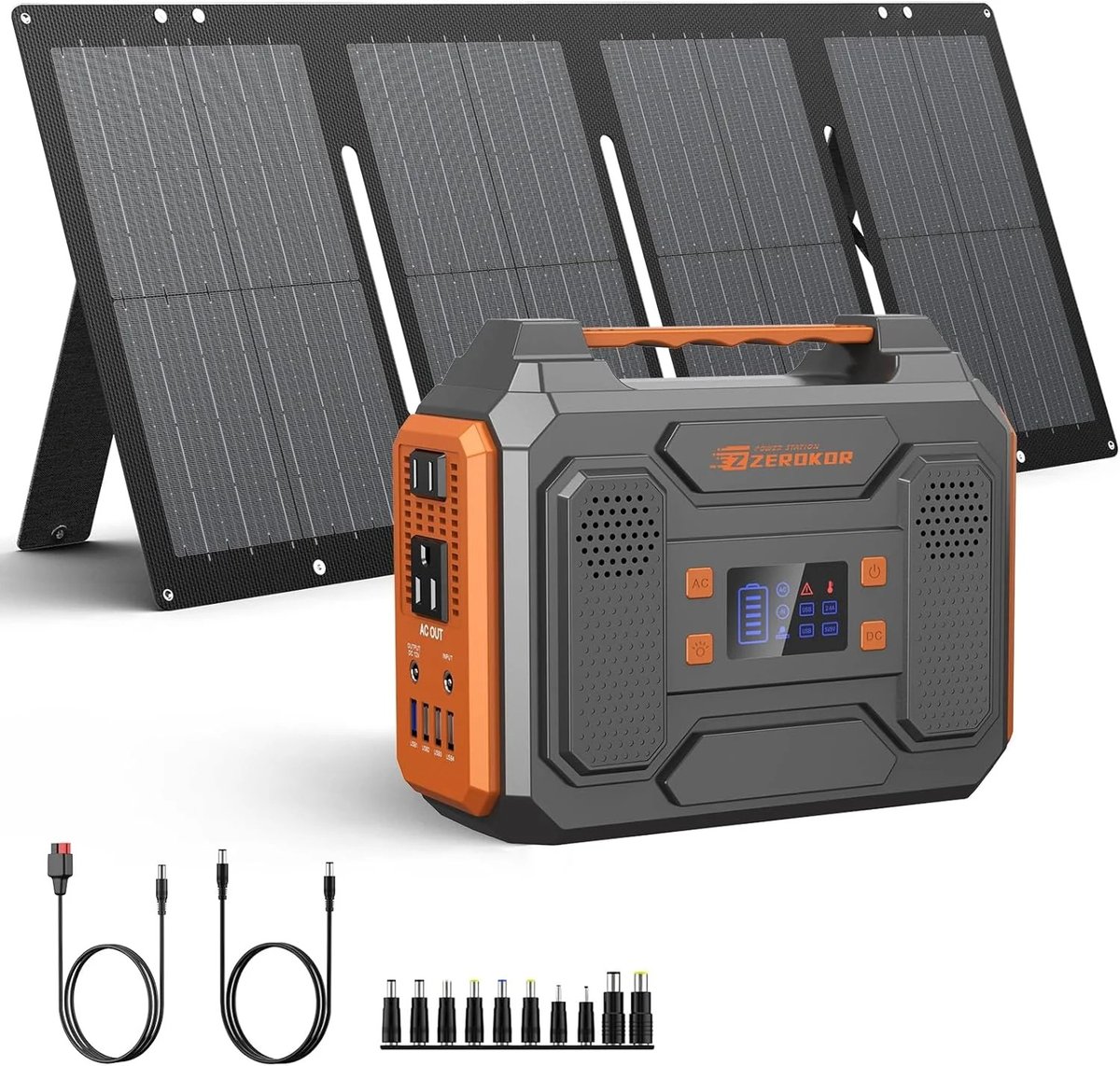
In an increasingly unpredictable world, reliable power isn't just a convenience – it's a necessity. Whether you're planning an adventurous off-grid escape, preparing for extreme weather events, or simply seeking an eco-friendlier way to power your life, solar-powered generators are emerging as the ultimate solution. These innovative devices offer a clean, quiet, and emissions-free alternative to traditional fuel-powered generators, giving you peace of mind and the freedom to power anything, anywhere.
Think of a solar generator not as a machine that creates power in real-time like a gas generator, but as a robust, portable battery that stores electricity. It's fundamentally a two-part system: a powerful battery pack (often called a power station) and a set of solar panels that convert sunlight into usable electricity to recharge that battery. This makes them incredibly easy to use, with lower long-term costs and no noisy fumes, setting them apart as a smarter choice for modern energy needs.
The Power of the Sun: How Solar Generators Work
At its core, a solar generator harnesses the sun's abundant energy and converts it into electricity that you can store and use whenever you need it. This process involves solar panels capturing photons and transforming them into direct current (DC) electricity. This DC power then flows into the power station, where an inverter converts it into alternating current (AC) – the same type of power your wall outlets provide – allowing you to plug in and run your everyday appliances.
Understanding the seamless interplay between these components is key to appreciating their efficiency and utility. For a deeper dive into the mechanics and essential setup, you'll want to explore the Solar Generator Basics & How. It covers everything from energy conversion to the internal workings of the battery and inverter, ensuring you grasp the full picture.
Why Choose Solar? Beyond Just Powering Up
The shift towards solar generators isn't just a trend; it's a smart evolution in portable power. Unlike their gas-guzzling counterparts, solar generators operate silently, eliminating the disruptive roar and exhaust fumes. This makes them ideal for sensitive environments like campsites, quiet neighborhoods, or even indoor use during emergencies, where air quality and noise are significant concerns.
Beyond the immediate environmental and comfort benefits, solar generators offer impressive versatility. They're perfect for everything from charging laptops and phones on a weekend camping trip to running essential home appliances like refrigerators during a power outage. Their minimal maintenance requirements and freedom from fuel dependency make them a reliable choice for long-term use.
Decoding Your Needs: Essential Metrics for Choosing a Solar Generator
Selecting the right solar generator means matching its capabilities to your specific power demands. It's not just about getting "a" generator; it's about getting "the right" generator. Several critical factors will guide your decision, ensuring you have enough power for your intended use without overspending on unnecessary capacity.
Watts and Watt-Hours: Understanding Power and Capacity
When evaluating solar generators, two terms are paramount: Watts (W) and Watt-hours (Wh).
- Watts (W) measure the maximum power a generator can output at any given moment. If you plan to run a 900-watt microwave, your generator needs at least a 900-watt output capacity. This determines what appliances you can power simultaneously.
- Watt-hours (Wh), on the other hand, tell you how much energy the generator can store and, consequently, how long it can power your devices. The duration a device can run is calculated by dividing the generator's total watt-hours by the device's wattage:
Generator Wh ÷ Device W = Hours of Runtime. A higher watt-hour capacity means longer runtime for your essential electronics and appliances.
Solar Capacity and Efficient Recharging
The effectiveness of a solar generator is also heavily dependent on its solar capacity – how quickly and efficiently it can recharge via solar panels. Solar panels are rated by their maximum watt input per hour, but real-world conditions like sunlight intensity, panel efficiency, and angle often mean you'll achieve only 50-75% of their potential output.
It's crucial that the solar panel input aligns with your power station's acceptable range to prevent damage. Modern units are designed for faster charging, allowing you to maximize daylight hours. Beyond solar, most units also offer rapid AC wall charging and 12-volt car charging for added flexibility.
The Evolution of Battery Technology
The heart of any solar generator is its battery, and significant advancements have been made in this area. While older models often used standard lithium-ion batteries, newer and more robust units predominantly feature Lithium Iron Phosphate (LiFePO4) batteries. These advanced batteries offer a dramatically longer lifespan, often boasting 4,000 charge cycles compared to the 500 cycles of their predecessors. They also perform much better in extreme temperatures, making them a more reliable choice for diverse environments.
For a deeper dive into the technical specifications and internal workings of these powerhouses, including battery types and inverter efficiency, understanding the Key Components & Technology for any solar generator is incredibly insightful.
Finding Your Perfect Match: Types and Applications
Solar generators come in a range of sizes and capacities, each designed to excel in different scenarios. From ultra-portable units that fit in a backpack to robust systems capable of powering an entire cabin, there's a solar generator for every need. Understanding these distinctions helps you pinpoint the best fit for your adventures or emergency preparedness.
- Portable & Compact: These smaller units (e.g., Goal Zero Yeti 500) are perfect for charging phones, laptops, and running small electronics during camping trips, tailgates, or short power outages. Their lightweight design makes them easy to transport.
- Mid-Sized & Versatile: Offering a balance of power and portability (e.g., Bluetti AC180, Jackery Explorer 1000 v2), these generators can handle mini-fridges, power tools, and multiple devices simultaneously, making them ideal for longer off-grid weekends or extended home backup for essential appliances.
- Large Capacity & Heavy-Duty: Designed for demanding tasks (e.g., EcoFlow Delta Pro, Anker Solix F2000), these units rival traditional gas generators in output, capable of running full-sized refrigerators, RV appliances, or critical home systems for days. Their size often comes with features like wheels for easier transport.
To explore these distinctions further and see how specific designs cater to various activities, you can Learn solar generator types and applications in more detail.
Top Picks: Our Recommended Solar Generators
Based on extensive research and user feedback, several models consistently stand out for their performance, reliability, and innovative features. Whether you need something lightweight for a day trip or a powerhouse for serious home backup, here are some options that lead the pack:
- Best Overall: Jackery Explorer 1000 v2
- Capacity: 1,070 Wh with a long-lasting LiFePO4 battery (4,000 cycles).
- Versatility: Seven ports, including AC, USB-C (100W), and car outlets.
- Use Case: Excellent for off-grid camping and powering smaller items; can charge a laptop 8 times or run a small fridge for 15+ hours.
- Best Value: Goal Zero Yeti 500
- Output: 500W AC (1000W surge) with an efficient LiFePO4 battery.
- Durability: IPX4 water-resistant and shockproof, maintains power even below zero.
- Use Case: Ideal for off-grid weekends and emergency backup for small appliances.
- Best Mid-Sized: Bluetti AC180
- Capacity: 1,152 Wh with a strong 1800W output (2700W peak) across four AC outlets.
- Charging: Features impressive 500W solar input and fast charging (80% in 45 min).
- Use Case: Runs a refrigerator for up to 17 hours, great for reliable mid-sized power needs.
- Best on Wheels: Anker Solix F2000
- Portability: Designed with heavy-duty wheels and a telescoping handle for easy transport.
- Output: Powerful enough for large appliances like refrigerators, greenhouse heaters, or RVs.
- Ports: A generous 12 ports, including RV-specific and multiple USB-C options.
- Best Large Capacity: EcoFlow Delta Pro
- Output: Rivals gas generators in sheer power, capable of powering a 25-cubic-foot refrigerator for over 51 hours.
- Charging Options: Charges via standard AC, EV charging stations, DC car adapter, and up to 1,600W solar input.
- Use Case: The go-to choice for campers, off-grid cabins, and critical home systems during extended outages.
- Most Ports: EcoFlow Delta 3
- Capacity: 1,024 Wh, providing 1,800W total output (X-Boost up to 3,600W) in a compact 28-pound form.
- Connectivity: Features 13 ports, including multiple fast-charging USB-C and USB-A.
- Charging: Achieves <1 hour AC charging and can be fully solar-charged in 2 hours with a 500W array.
For a more detailed breakdown of these and other top-rated models, including in-depth specifications and purchasing advice, Here are a few options for every budget and power requirement.
Maximizing Your Solar Generator's Lifespan and Efficiency
To ensure your solar generator remains a reliable power source for years to come, proper charging and battery care are essential. While AC wall charging is typically the fastest, leveraging 12-volt car charging and, of course, solar panels provides flexible options for keeping your unit topped up. A large solar array, in particular, can offer competitive charging speeds.
For optimal battery health, aim to charge your power bank whenever possible, ideally keeping it at least at an 80% level. Once fully charged, it's best to unplug the unit to prevent unnecessary battery degradation. Conversely, avoid letting the battery level drop below 20%, as consistently deep discharges can shorten its overall lifespan. These simple practices will significantly extend the life and performance of your investment.
Learning the nuances of Installation, Setup & Maintenance of these devices will not only maximize their operational efficiency but also ensure their longevity, protecting your investment for countless adventures and emergencies.
Empower Your Future with Solar
Embracing solar generator technology is more than just buying a device; it's investing in energy independence, environmental responsibility, and unparalleled peace of mind. Whether for spontaneous adventures or vital emergency preparedness, these silent, clean powerhouses offer a sustainable alternative that's becoming increasingly indispensable. By understanding their capabilities and integrating them into your lifestyle, you're taking a significant step towards a more resilient and eco-conscious future.